AISS — Services
Services – Tailored support

Services that make AI work. Safe, human-centred and practical.

Get tailored support for AI-related questions and challenges: from AI readiness and implementation to evaluation, validation, research and AI literacy. We choose what fits your goals, context and people.

At a glance
  • Vendor-neutral and pragmatic: tailored support aligned to your organisation.
  • Human-centred and holistic: bring people along and manage risks sustainably.
  • Build self-reliance: set up processes, governance and skills for long-term AI readiness.
From question to assurance
Readiness • Validation • Implementation • Monitoring
AI readiness
Baseline and prerequisites clarified
Evaluation & validation
Holistic assessment of value & risk
Implementation
Embed in workflows, roles & culture
Monitoring
Track, adjust and improve in practice
Step 1
Readiness
Step 2
Evaluation & validation
Step 3
Implementation
Step 4
Monitoring
Risk control Adoption Measurable progress

Services

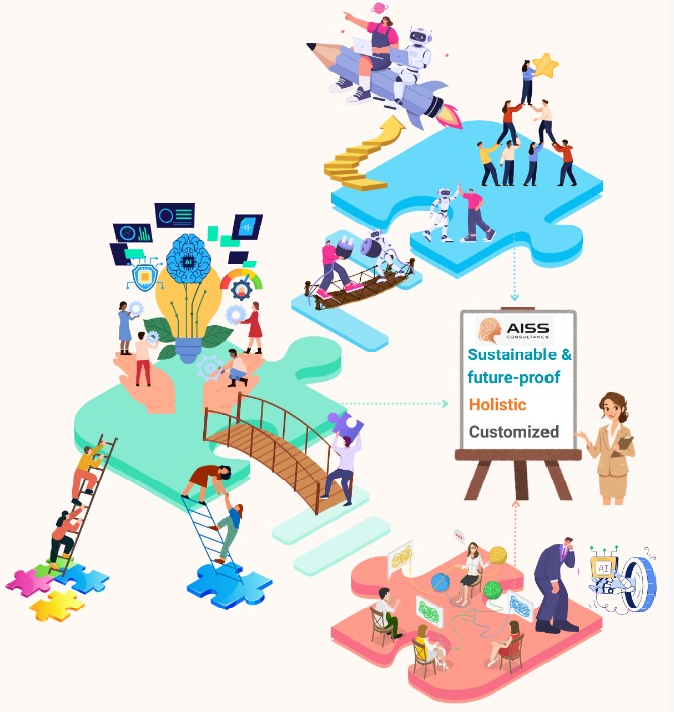
Whether AI is valuable for your organisation depends on many factors. AI must align with your organisation’s norms and values, and be able to adapt to your context. That requires a tailored approach—no one-size-fits-all solutions or generic support. That’s why services are always aligned with your organisation, needs, risks and AI goals, and are evaluated together periodically.

Tip: expand a service to view details.

AI readiness & roadmap

From your current baseline to realistic goals, priorities and concrete steps for responsible AI adoption.

What this involves

To truly benefit from AI, it’s important to first understand whether your organisation is sufficiently prepared. This is called AI readiness and includes general components (e.g., regulation and AI literacy) and organisation-specific components (e.g., governance). A strong foundation and governance make implementing and integrating AI successful in the short and long term.
What you can expect

  • Evidence-based, tailored support with joint alignment and periodic evaluations.
  • Human-centred, holistic approach by involving relevant stakeholders and strengthening collaboration.
  • More self-reliance by bringing you and key internal players along, building future readiness for AI.

My approach

  1. Assess current AI readiness
    • Interviews and workflow observation.
    • Mapping your internal AI landscape and stakeholders.
  2. Define the target state & what it takes
    • Clarify goals, vision, scope and risks.
  3. Roadmap to the target state
    • Realistic steps to progress towards the target state.
    • A checklist to monitor progress.

Deliverables

Deliverables depend on your needs and wishes. We align on what they should be and what “good” looks like. Examples:

  • A roadmap with or without an implementation plan.
  • An advisory report with implementation strategy/plan.
  • A roadmap including strategy and a progress monitoring checklist.

Implementing & integrating AI

From preparation and selection to implementation, integration and sustainable embedding.

What this involves

AI is complex and can deliver significant value, but correct implementation is crucial. It’s essential to involve all relevant stakeholders—especially end users—early in the process. This drives effective, efficient and sustainable adoption and integration of AI into daily work.

What you can expect

  • Support aligned to where you are: from selecting the right tool(s) and running a pilot to scaling, implementing and integrating.
  • Human-centred, holistic approach by involving stakeholders and strengthening collaboration.
  • I act as a linking pin between parties to improve alignment and delivery.
  • Goal: increase your organisation’s self-reliance for future AI implementations.

My approach

  1. Assess current state & preparation needs (incl. AI readiness).
  2. Evaluate and validate the intended AI tool(s).
  3. Create implementation plan/strategy and AI governance (incl. privacy, KPIs for evaluation & monitoring).
  4. Execute, evaluate and define next steps / integration options.

Deliverables

Deliverables depend on your needs and scope. Examples:

  • Business case.
  • Implementation plan and/or implementation strategy.
  • AI governance proposal.

AI evaluation, validation & monitoring

A holistic framework to choose, test, track and improve AI in your organisation.

What this involves

Choosing the right AI tool(s) for your problem and organisation can be complex. The market is crowded with different goals, features, vendors and usage modes. You may wonder what to consider (e.g., regulation), which tools are safe, how to decide objectively, who to involve, what risks exist and which KPIs matter. A clear, holistic evaluation/validation/monitoring framework aligned to both regulation and your organisation is essential.

What you can expect

A practical approach that helps you not only choose or use AI, but also continuously assess and adjust. This supports control over performance, risk, compliance and organisational fit—with clear ownership and follow-up.

My approach

  • Set up an evaluation framework (what to measure, why, and how often).
  • Define validation criteria (quality, reliability, safety, organisational fit).
  • Agree monitoring responsibilities (signals, escalation, ownership).
  • Build an improvement loop (feedback, updates, documentation).

Deliverables

Deliverables depend on your needs and scope. Examples:

  • Holistic, multidisciplinary evaluation & validation framework (digital support system or protocol/work instruction).
  • Advisory report.
  • Business case.

Support for (scientific) research on/about/with AI

Robust research design, execution, data governance and translation to practice and implementation.

What this involves

Scientific research on AI—measuring impact, effectiveness, functioning and applicability objectively—is increasingly important. Strong validity and reliability are crucial for regulation (e.g., EU AI Act and EHDS) and can influence adoption. This requires a rigorous approach spanning research methods, domain context and AI-specific considerations (data, model types, regulation).

My approach

The approach depends on research type (qualitative, quantitative, experimental), scope and sector (e.g., healthcare, public, commercial), AI type (e.g., anomaly detection) and where you want support (from proposal to execution and follow-up). Many stakeholders may be involved (researchers, participants, ethics boards). We align these aspects and define a fitting approach together.

Areas I can support

  • Research proposal: integrating regulation into data management/processing; selecting and justifying training/testing approaches.
  • Research preparation: informing study populations for data collection.
  • Execution: monitoring agreed data governance and policies.
  • Strengthening collaboration among direct and indirect stakeholders.
  • Post-research next steps: translating TRLs into practical steps towards market readiness.

Increase AI literacy

Measurable training and skills for safe AI use—aligned with roles, industry and AI types.

What this involves

If your organisation uses AI in daily work, people need the right knowledge and skills—AI literacy. This is a legal requirement under the EU AI Regulation: since February 2025, organisations must set up and run an internal AI literacy programme. Supervisory bodies may require evidence that staff have adequate AI literacy for the relevant AI systems and sector. Designing and delivering a compliant, inclusive programme requires tailored work.

What you can expect

  • You don’t need to figure out all legal requirements alone.
  • An evidence-based, auditable approach aligned with regulation and practice.
  • A programme that matches your organisation, roles, workflows and required literacy levels.

My approach

First, I get to know your organisation. Then I systematically determine which AI literacy requirements apply and how to translate them into practice:

  • Assess the current situation.
  • Define required AI literacy levels.
  • Design the training programme and self-assessments.
  • Maintain and grow: a tailored monitoring strategy.

Deliverables

  • Tailored AI literacy self-assessment (for evaluation & monitoring).
  • Slides/materials from training sessions.
  • Tailored AI curriculum (programme + rationale + strategies).
  • Tailored e-learning modules for different AI literacy levels (beginner to expert).

Who it’s for

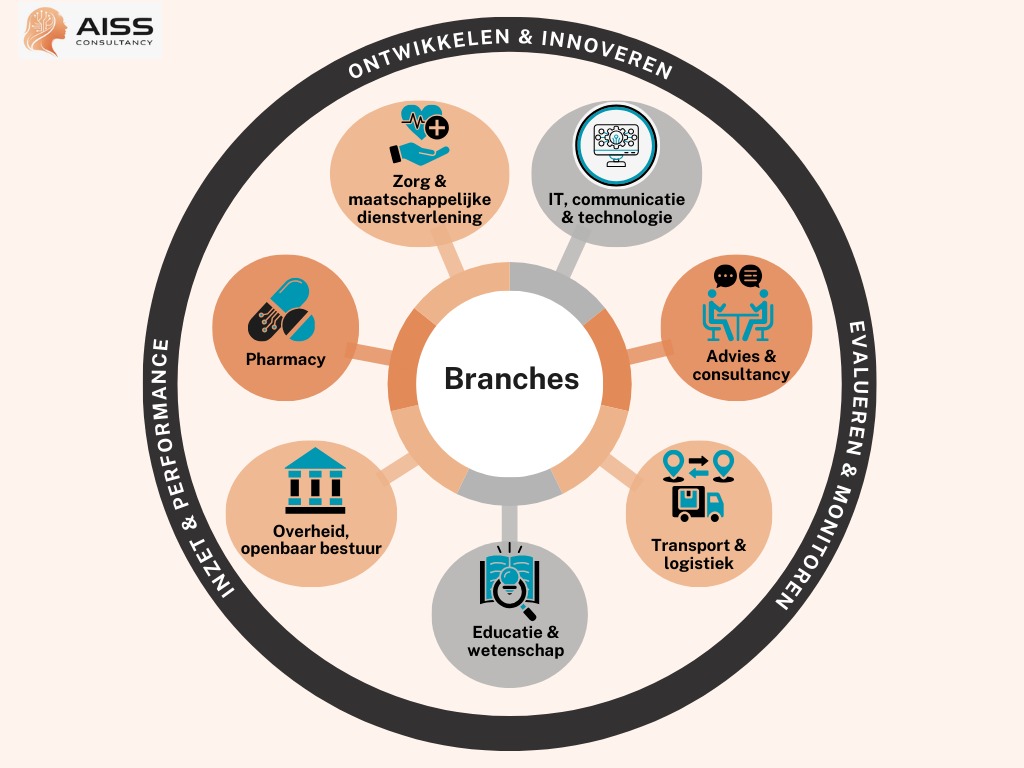
AI is widely discussed across many organisations and sectors, including healthcare and commercial settings. AI is complex and comes with prerequisites (e.g., ethics, legal obligations, terms of use), risks and uncertainties. With my expertise, my services are intended for anyone dealing with AI and everything that comes with it.

Common questions

  • How do we choose the right AI tool and vendor safely?
  • How do we implement and integrate AI so it’s truly adopted?
  • How do we evaluate, validate and monitor AI structurally?
  • How do we build measurable AI literacy in our organisation?

The intake

If you’re considering working together, you can schedule a non-binding intake call of approximately 30 minutes. Via the button below you’ll reach the contact form to share your details. After submitting, you’ll receive a confirmation within 24 hours.

Schedule an intake call

~30 minutes. You’ll leave with direction and next steps.

Topics we cover

  • Stakeholders and context of the challenge.
  • What has priority (the core problem).
  • Budgets and timing.
  • Intended goals and a high-level approach.
  • Conditions for a concept proposal (collaboration, shape, etc.).

Next steps after the intake

After the intake you’ll receive a cost indication. If you decide to proceed, we define concrete agreements and next steps.

Pricing

Because services are tailored, pricing is tailored as well. After the intake you’ll receive a cost indication based on what we discussed. The estimate and total price are determined and substantiated using Value-Based Pricing (VBP).

How pricing is determined

  • Complexity of the AI challenge and level of support required.
  • Scope of work (e.g., intake, sprint, engagement, ongoing guidance).
  • Number of stakeholders, teams and alignment sessions.
  • Desired deliverables, evaluation moments and documentation.

After the intake

You’ll receive a substantiated estimate aligned to expected value and impact. This gives clarity upfront and helps you choose the right option.